




China OEM Skincare Export Data 2024-2026: Market Intelligence for Brand Owners

Understanding China’s Skincare OEM Export Landscape
China has emerged as the world’s leading skincare OEM manufacturing hub, driven by advanced production capabilities, competitive cost structures, and increasingly sophisticated R&D infrastructure. For international brand owners, understanding the China OEM skincare export ecosystem is essential for strategic sourcing decisions and supply chain optimization. This intelligence report provides data-driven insights for 2024-2026 market planning.
China Skincare Manufacturing Market Overview
Market Size and Growth Trajectory
- Total OEM/ODM Market Size: $18.5 billion USD (2024 estimate)
- Skincare Segment: $8.2 billion USD, representing 44% of total
- Growth Rate: 8.7% CAGR through 2026
- Export Share: 42% of skincare production exported globally
- Top Export Destinations: Southeast Asia (28%), Europe (24%), North America (22%), Middle East (12%), Africa (8%), Other (6%)
Key Export Data Points 2024
Product Category Breakdown
- Facial Serums/Ampoules: 35% of export volume, highest growth category (12% YoY)
- Moisturizers/Creams: 28% of export volume, stable growth (6% YoY)
- Cleansers: 15% of export volume, moderate growth (5% YoY)
- Sheet Masks: 12% of export volume, declining (-2% YoY)
- Sun Care: 6% of export volume, high growth (15% YoY)
- Other Categories: 4% of export volume
Active Ingredient Trends in Exports
- Recombinant Collagen: 340% increase in export formulas containing this ingredient
- Niacinamide: Present in 68% of exported skincare products
- Peptides: Present in 45% of premium/exports, up from 32% in 2022
- Centella Asiatica: Present in 38% of export formulas
- Vitamin C Derivatives: Present in 42% of export formulas
Competitive Advantages of China OEM Manufacturing
Manufacturing Excellence
- Advanced Facilities: Leading Chinese OEM facilities feature state-of-the-art equipment matching or exceeding Western standards
- Certification Coverage: ISO 22716, GMPC, and regional certifications (EU, US FDA, HALAL, etc.)
- Regulatory Expertise: Domestic CFDA/NMPA expertise applicable to export market compliance
- Production Capacity: Scalable operations with rapid capacity expansion capability
Cost Competitiveness
- Manufacturing Cost: 30-50% lower than Western OEM alternatives
- Minimum Order Quantities: Flexible MOQs starting from 1,000 units for certain formats
- Supply Chain Efficiency: Domestic active ingredient production reduces lead times
- Labor Cost Advantage: Skilled workforce at competitive compensation
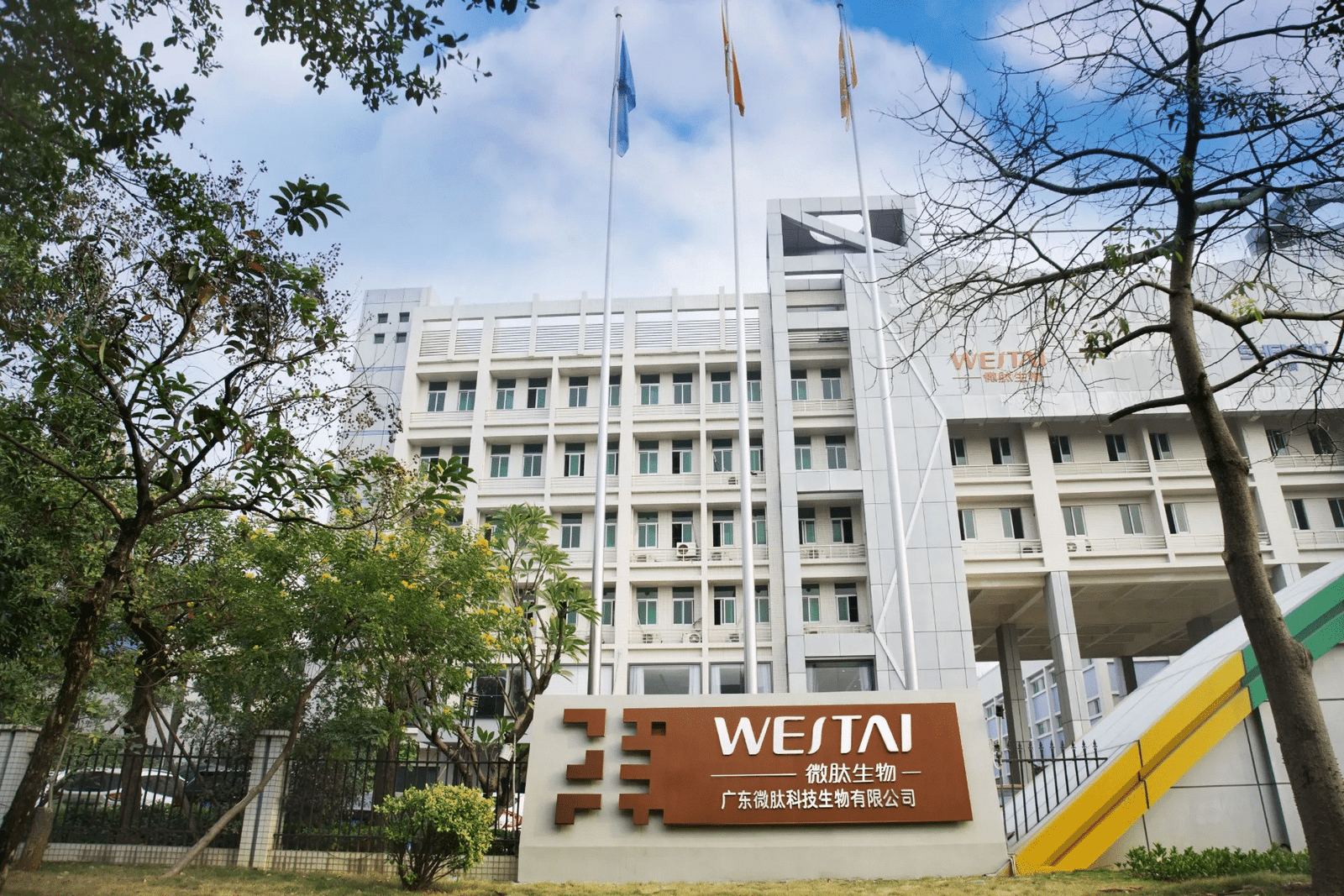
Weitai Biotechnology: Your Strategic OEM Partner
Weitai represents the evolution of China OEM manufacturing excellence:
- 110+ NMPA Class II/III Medical Device Certifications: Demonstrating regulatory capability
- 80,000m2 GMP Production: State-of-the-art manufacturing across 6 bases
- 100,000m2 Total Area: Room for expansion and vertical integration
- 20+ Domestic Patents: Innovation-driven R&D capability
- 30+ International Patents: Global market compliance and IP protection
- Export Experience: Proven track record with global brand partners
Strategic Recommendations for Brand Owners
Sourcing Strategy Development
- Partner Evaluation: Prioritize facilities with verified certifications and audit reports
- Capability Matching: Align supplier capabilities with product complexity requirements
- Risk Mitigation: Develop dual-sourcing strategies for critical components
- Quality Systems: Verify quality management systems match your standards
Market Entry Considerations
- Regulatory Compliance: Ensure destination market registration requirements are met
- Ingredient Transparency: INCI labeling and allergen declarations for all markets
- Documentation Standards: COA, SDS, and regulatory documentation packages
- Intellectual Property: Execute appropriate NDAs and IP protection agreements
Frequently Asked Questions
What are the typical lead times for China OEM skincare production?
Standard lead times range from 30-60 days for formula development, 45-90 days for production (depending on complexity), and 14-30 days for shipping (destination-dependent). Total timeline of 3-6 months from brief to delivery is typical for new product launches.
What certifications should we require from Chinese OEM partners?
Essential certifications include ISO 22716 (cosmetics GMP), with additional requirements depending on destination markets: EU-compliant CPSR documentation, FDA facility registration, HALAL certification for Muslim markets, and Cosmos/Ecocert for natural positioning. Verify current certification status through third-party audits.
How do we protect our formulation IP when working with Chinese OEMs?
Implement comprehensive IP protection: execute detailed NDAs with specific remedy provisions, consider formula encryption or component splitting for sensitive ingredients, register IP with Chinese authorities, and build relationships with partners demonstrating ethical business practices. Weitai maintains strict IP protection protocols for all client formulations.
What are the current shipping and logistics challenges?
Current logistics include shipping times of 25-35 days to US/Europe, cost increases of 15-25% versus pre-2020 levels, and port congestion at major terminals. We recommend buffer stock strategies and flexible logistics arrangements to mitigate disruption risk.
Conclusion
China OEM manufacturing offers compelling advantages for international brand owners, but success requires careful partner selection and relationship management. Weitai represents the highest tier of China OEM capability, combining manufacturing excellence with proven export experience.
Contact Weitai Biotechnology for OEM samples and formulation support

